
A practical test for menswear deals
For an everyday menswear purchase, a promotion is worth considering when it helps meet a real wardrobe need at a complete cost you can accept. The word “deal” alone cannot answer that. Ask four questions: Is this item on your list before you see the offer? Do its cut, measurements, material and care instructions suit the way you dress? Is the total cost clear for the same basket, including delivery and any applicable return charges? Would the retailer’s current return route and conditions work for you?
Start with the item you intended to buy, then assess the offer against that need. A lower displayed price may matter if you already want a suitable replacement or an additional item you expect to wear. An item that does not fit your wardrobe can still be poor value at a reduced price, especially if you are unsure about its fit or the cost of returning it.
This guide is buying guidance, not a report of personal product testing. It offers a repeatable way to inspect retailer listings, compare like-for-like baskets and check the relevant purchase terms. It does not treat a percentage-off message as proof that an item has a verified discount history. Keep the decision practical: need, product details, full cost and acceptable terms should all line up before you order.
When a promotion adds useful value
Begin with a specific use: a work shirt to replace one that no longer fits, trousers for a regular outfit, or a layer that works with clothes you already wear. Then check whether the product listing gives enough information to judge the item against that use. Look for the stated size chart, garment measurements, material composition and care instructions. Compare those details with your own preferences rather than relying on the item name or the size label alone.
Think about repeat wear in terms of your own routine. If you expect to use a piece regularly and it works with several things you own, its usefulness may justify considering it. If you cannot name when you would wear it, the reduced price may be doing more to attract attention than to meet a need. A simple personal check is to estimate how often you realistically expect to wear the item, then ask whether you would still choose it at the complete checkout cost.
Consider the item as part of an outfit, too. A shirt that needs another purchase to be wearable may not serve the same purpose as one that works with clothes already in your wardrobe. Check whether the colour, cut and care requirements suit your habits. Avoid treating a multi-buy offer as value if it pushes you to order extra pieces you had not planned to buy.
A promotion adds useful value when the product details, expected use and final cost make sense together. Keep a note of the exact item or items you are comparing so that a changed colour, pack size or fit does not turn the comparison into a different purchase. If key information is missing, pause and look for it on the retailer’s listing or ask the retailer before deciding.
What a headline price does not prove
A displayed offer price tells you what the retailer is showing at that point. It does not, on its own, establish how the same product was priced previously. To assess a claimed reduction, you would need dated price observations for the same product and a clear basis for comparing them. A large percentage can prompt a closer look, but it cannot substitute for that record.
The official pages linked in this guide focus on return or purchase terms. The details cited here contain no dated offer prices or price-history observations, so they cannot validate a claimed discount or show whether a price is lower than before. For a current decision, check the item’s live listing and record the product, price and date you see. Keep colour, size, quantity and product identity consistent when comparing observations.
The FatFace UK terms page says its terms were correct as of 23 July 2025. That date is important context for reading the excerpt: it is not verification of a current promotion or current return conditions. Recheck the retailer’s live terms and the product listing before ordering.
Treat price evidence and purchase terms as separate checks. A dated price record may help assess a price change, while a return page may help you understand the route and conditions if an item does not work for you. Neither answers the other question. When one part is unclear, do not fill the gap with an assumption; verify the exact item and order details with the retailer.
Compare the total basket cost
AI-generated generic editorial illustration — not a retailer product photo and does not depict the reviewed product or service. Give readers a reusable visual for comparing the full basket cost using dated listing or live-checkout figures, without inventing example prices or savings.
Compare the same intended purchase across retailers. Match the items, quantities and, where possible, comparable product specifications before adding up costs. Record the item price shown on the listing and the date checked. Then check delivery charges, any minimum spend needed for a delivery option, and any return cost that could apply under the terms for that order.
| Check | Offer A | Offer B |
|---|---|---|
| Same items and quantities | ||
| Listing price and date checked | ||
| Delivery charge and any minimum spend | ||
| Applicable return route and cost | ||
| Total if you keep the order | ||
| Total after any return, if calculable |
Use the figures displayed for your own basket, not a sample price or an assumed discount. For an order you expect to keep, add the item prices and any delivery charges or required extras. If you might return something, check which costs would remain and which amounts the retailer says it will refund. Calculate a return scenario only when the current terms give you enough information to do so.
The M&S help page describes a free return-by-post option. Treat that as an M&S-specific example, not a rule for other retailers or every order; check the current terms for your exact purchase and preferred return route. M&S returns and refunds
Compare the totals for the same need, then consider whether the difference changes your decision. A lower item price might not produce a lower basket total once delivery or applicable return costs are included. If one offer’s charges are unclear, mark them as unknown and check the live checkout or retailer terms rather than entering an estimate. For more detail, consult our guide to UK delivery and return costs before checkout.
Check fit, fabric, and buying terms
Before ordering, use the retailer’s size chart as a starting point and compare the garment measurements with an item you already find comfortable, where measurements are provided. Check the stated material composition and care instructions against your preferences and routine. Think about how you want the garment to sit, what you plan to layer it with and whether the listed care method is practical for you. If a measurement or product detail is missing, seek clarification rather than treating a familiar size label as a guarantee.
Before paying, check the current return deadline, item-condition requirements, available return routes, refund process and any costs. Confirm that the terms apply to the product and order type you are considering. Save or note the relevant details when you place the order so you can refer back to the retailer’s instructions if needed.
The UNIQLO UK return overview states a 30-day return and exchange deadline for store purchases from the purchase date, and for online orders from receipt. It says an online return due date appears in Purchase History. It also states that returned items must be unused, unwashed and complete with original packaging and accessories in their original condition, and must not fall into the listed ineligible categories. Check the full current conditions for your order before relying on this example.
A return deadline does not resolve every question about fit or eligibility. Review the product-specific information and the retailer’s current terms together. If you are buying multiple sizes or colours to decide later, first confirm whether the return route and any associated costs make that practical. For help comparing sizing information, consult our guide to men’s size charts and garment measurements.
What official retailer pages establish
AI-generated generic editorial illustration — not a retailer product photo and does not depict the reviewed product or service. Visually distinguish the limited facts established by each supplied official page and prompt readers to recheck the relevant current terms.
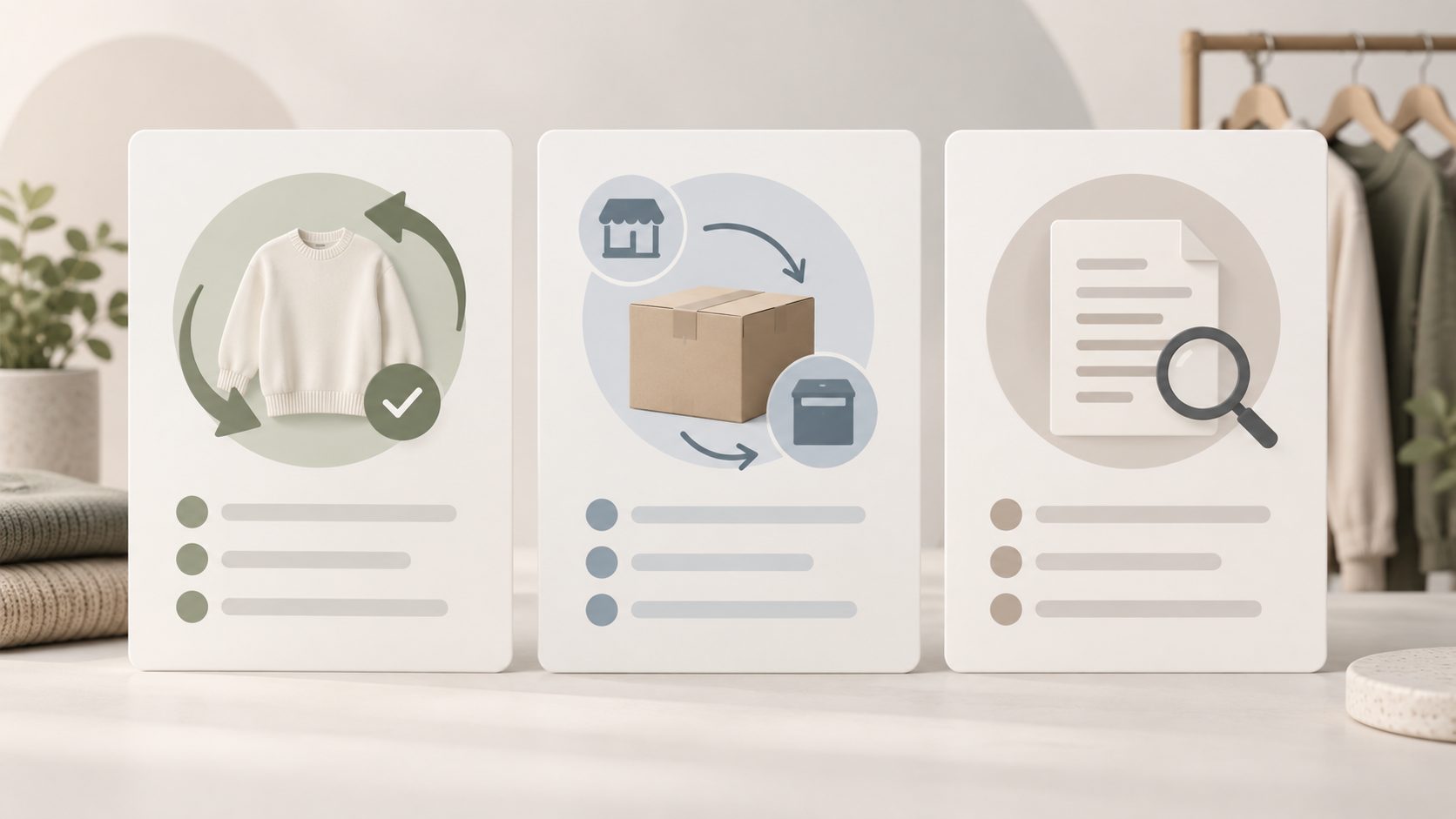
The linked pages provide different kinds of purchase information. Compare only the details each page actually states, and revisit the relevant retailer page before you order.
| Retailer page | Details stated on the page | What to recheck |
|---|---|---|
| UNIQLO UK return overview | 30-day store and online return and exchange deadlines; online due date shown in Purchase History; original-condition requirements | Full current conditions and ineligible-item list for the order |
| M&S returns and refunds | Store returns described as the quickest route; free return by post; account-based return steps and tracking | Available method, costs and instructions for the exact order |
| FatFace UK terms | Terms marked correct as of 23 July 2025; different suppliers identified for online orders and store purchases | Current terms and return information for the purchase route |
UNIQLO’s overview gives the stated return and exchange deadlines and original-condition requirements. M&S describes store returns as the quickest route, says return by post is free, and explains that customers can start a return and check its status through an account. These are retailer-specific statements; use the linked pages to check the complete conditions for your own order.
The FatFace excerpt identifies Next Retail Limited as the operator and supplier for website orders, and FatFace as the supplier for goods purchased from a FatFace store. Its stated 23 July 2025 date limits what that excerpt can establish about current terms. It does not verify a current promotion or, by itself, settle the return conditions for a purchase today.
Use these pages to identify which purchase details need checking. Do not compare one retailer’s return route with another’s as though the rules were shared. The final check belongs to the retailer and order you are considering: confirm the current policy, the product’s eligibility and any costs before checkout.
Frequently Asked Questions
Does a large discount prove that a menswear item is a genuine deal?
No. A displayed reduction does not by itself show the product’s earlier prices. Compare dated observations for the same item if you need to assess a price history, and weigh the live basket total, product details and current buying terms. The linked retailer pages here cover terms and returns, not dated offer prices or price histories.
How should I compare two offers when delivery or return costs differ?
Use the same items and quantities, then compare listing prices, delivery charges, any required minimum spend and applicable return costs. Check the live checkout and current terms for each retailer. If a charge is not clear, leave it unresolved until you can verify it; do not fill in a guessed figure.
Can I return sale items after ordering online?
Check the current terms for the retailer and item; the pages here do not establish one rule for all sale items. UNIQLO’s overview gives a 30-day online deadline from receipt, shows the due date in Purchase History and sets original-condition requirements, with listed ineligible categories. Review the full current conditions to see whether they cover your item.
What should I check about fit and fabric before buying?
Compare the product’s size chart and garment measurements with your preferences, then review the stated material composition and care instructions. Also check the current return deadline, condition requirements, available route, refund process and any costs in case the item does not work for you.
Related reading
- Best UK everyday menswear essentials: evidence-led top choices
- UNIQLO vs Marks & Spencer: which is the better fit
- UNIQLO review: strengths, limits, and alternatives
- Marks & Spencer review: who it suits and who should skip it
Editorial information: About our editorial team · Read our editorial policy · Read our affiliate disclosure.