
How to Evaluate Everyday Menswear Fit
Choosing everyday menswear is easier when you treat size as one part of the decision. Look at the measurements a retailer asks you to use, the garment’s intended shape, how it sits on your body and whether its published details suit your routine. This is editorial buying guidance, not a report of personal product testing.
A size label alone may not tell you how an item will fit. UNIQLO explains that products with the same label can fit differently because each design may have a different intended fit, and recommends checking the sizing information and tools on the product page (UNIQLO size guidance).
Use a simple sequence: start with the measurements requested by the retailer, read the relevant size chart, then inspect the specific item’s measurements and fit description where available. After that, consider whether the shape, length and movement suit how you plan to wear it. Product descriptions and care information can also help you judge whether the item fits your everyday needs.
These checks help you make a more informed choice from the information published by the retailer. They cannot guarantee how a garment will feel on you, so treat unclear or missing details as a reason to compare carefully rather than assume that a familiar label settles the question.
What Published Size Guides Can Tell You
A retailer’s size guide can be a useful starting point, but first check what kind of page you are looking at. The M&S Size Guides index presents category navigation, including a Men category. The index is a route to relevant guides; it does not itself establish the measurements for a particular garment.
Once you reach a relevant guide, follow its instructions and note which body measurements or size references it asks you to use. Retailer guides can help you form an initial shortlist of sizes to compare. They are most useful when you read the chart’s labels and units carefully and make sure it applies to the category you are shopping for.
The FatFace size guide is one example of a retailer page with more specific information. It says FatFace clothes are cut generously, includes chest and waist information for men’s clothing, and explains terms such as inside leg. It also states that lengths are given on product pages. Those details describe FatFace’s own guidance; they are not a rule for other brands.
Keep body measurements and garment measurements distinct. A chart may help you choose a size based on your body, while a product page may provide information about the item itself. When both are available, compare them in the way the retailer describes. If the chart only offers broad categories or does not answer a question about a particular item, use it as an initial reference and continue to the product details.
Measure First, Then Check the Specific Product
AI-generated generic editorial illustration — not a retailer product photo and does not depict the reviewed product or service. Turn the published sizing steps into a practical visual sequence without implying independent product testing.
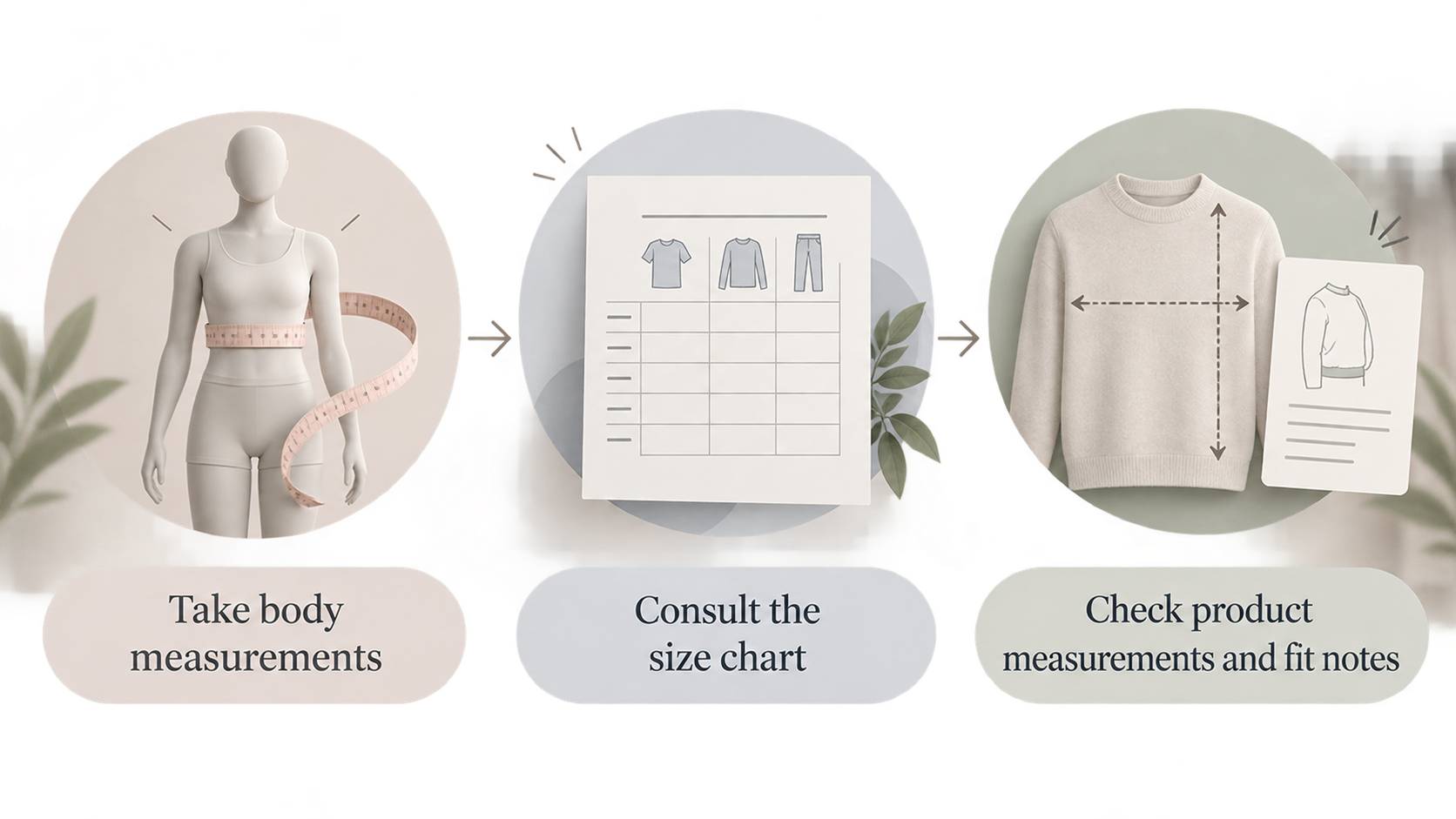
Start with the measurements requested by the retailer whose item you are considering. Use that retailer’s own instructions, units and chart, rather than assuming every brand defines a size in the same way. A measurement record can help you make a first comparison, but only when it matches the chart or tool you are using.
Next, consult the relevant size chart and note which sizes appear worth checking. Do not stop at the label. UNIQLO says that products carrying the same size label may fit differently because they are designed for different fits, and recommends using the sizing information and tools available on each product page (UNIQLO size guidance).
Then open the page for the exact garment. Look for any listed product measurements, fit description or notes about length. Compare those details with the retailer’s chart and your intended use. A general chart can orient you, but an item-level detail may answer a question the general chart cannot, such as where a hem is expected to sit or whether the shape is described as close or roomy.
If the page gives measurements for the product, check what each measurement refers to before comparing it with your own. A body measurement and a garment measurement do not describe the same thing. Use the retailer’s explanation where provided, and avoid treating a numerical match as a complete fit verdict without considering the item’s stated design.
This first-pass method is deliberately repeatable: take the measurements the retailer requests, consult the appropriate chart, inspect the specific product information, and then assess the garment’s shape and movement. If a key detail is missing, or if the chart and product description seem difficult to reconcile, pause before choosing. A familiar size label should not replace the item-specific information that is available.
Assess Fit Across Everyday Essentials
The checks below are editorial prompts for comparing a garment with its stated fit and available measurements. They are not retailer specifications or results from hands-on testing. The aim is to notice proportion and ease of movement, then use the product description to decide whether that shape suits the way you intend to wear the item.
For shirts and T-shirts, consider where the shoulder area and body sit, whether the sleeves and overall length look appropriate for your intended styling, and whether the shape matches the description. Move your arms forward and overhead to see whether the garment remains comfortable for the motions you expect to make. These are personal checks, so compare what you observe with the listed fit and measurements rather than treating one silhouette as universally correct.
For knitwear, think about whether you want it to sit close to the layers beneath it or leave room for them. Check the stated fit and any available product measurements, then consider how the length works with the trousers or other pieces you plan to wear. If a product is described as relaxed or oversized, use that description as context for the intended shape instead of assuming the label alone will explain the result.
For trousers, look at the waist and leg shape, then check any available inside-leg or length information. FatFace’s size guide explains the inside-leg term and says product lengths are given on its product pages; this is an example of one retailer’s published guidance, not a universal sizing convention (FatFace size guide). When assessing movement, try the motions relevant to your day, such as sitting or walking, and decide whether the fit feels suitable to you.
For outer layers, consider what you plan to wear underneath and whether the stated shape allows for that. Check length and sleeve details where the product page provides them. Try the ordinary movements you expect to make while wearing the layer, such as reaching or sitting, and use your own comfort as a practical check. The result is a personal assessment; it does not establish how the garment performs for everyone.
Across all categories, decide what matters most for that item: a closer outline, room for layering, a particular length or ease during movement. Then compare those preferences with the retailer’s fit wording and measurements. If the published information does not resolve your question, avoid turning a general size label into a guarantee.
Check Product Details for Fabric and Care
Fit is only one part of deciding whether an item suits an everyday wardrobe. Before buying, read the product information for the fabric or composition details the retailer provides, any construction description, and the care instructions. Treat these as separate pieces of information: one describes what the seller says the item is made from, while care information tells you what instructions the seller publishes for looking after it.
Use the details to answer practical questions about your own routine. For example, consider whether the stated care instructions are workable for you and whether the item’s listed composition is what you are looking for. Do not assume a performance quality that the product page does not state. If a detail matters to your decision and is not provided, the available information may not be enough to settle that point.
Retailer pages may place sizing and care information in different parts of their customer guidance. UNIQLO’s help page, for example, lists “Check the Product Details” and “Care Guides” among its guidance topics (UNIQLO size guidance). Use the relevant product and care information that is actually available for the item you are considering. A general assumption about a fabric or garment type should not take the place of those published details.
Know the Limits of Labels and Size Charts
AI-generated generic editorial illustration — not a retailer product photo and does not depict the reviewed product or service. Show why a size label alone may not predict a garment's intended fit, using the fit terms documented in the official guidance.
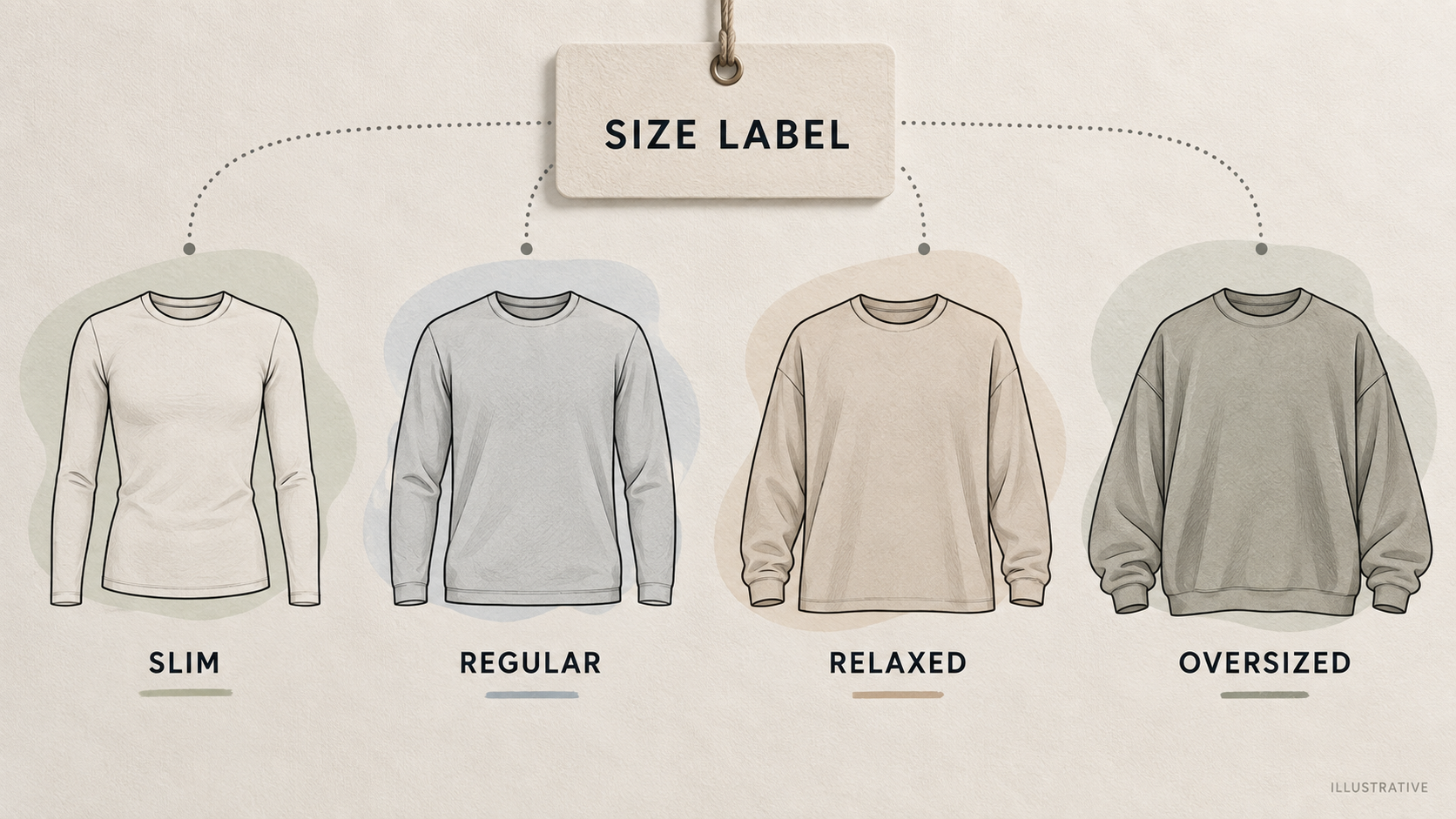
Treat a size label as a starting reference. UNIQLO explains that its products may fit differently even when they share a label, because designs can have different intended fits, including regular, slim-fit, relaxed-fit and oversized. It directs shoppers to item-level sizing information and tools for help choosing a suitable size (UNIQLO size guidance). That is a useful reminder to check the design, rather than an assertion that every retailer uses the same fit terms.
Retailer-specific wording also matters. FatFace says its clothes are cut generously and provides a size guide to help shoppers choose; treat that as guidance about FatFace rather than a general rule for UK menswear (FatFace size guide). Another retailer’s chart or fit description may use different references, so read the page that belongs to the item you want.
A chart is directional when it helps narrow choices but leaves an item-specific question unanswered. Check product measurements and fit notes where available, especially if length, room for layering or a particular silhouette matters to you. Read the labels on measurements carefully: a body reference and a garment dimension answer different questions, and neither alone captures your personal preference for ease or shape.
If important sizing information is unclear, look for a sizing contact route offered by that retailer or compare another item whose published details answer your question. Keep the decision tied to the evidence available for that product. A general chart can help begin the choice; product-specific details can help resolve uncertainty about the exact garment.
Frequently Asked Questions
Should I buy my usual size if the label is the same?
Use your usual size as a starting point, then check the exact item. UNIQLO says that products with the same size label can fit differently because the designs may have different intended fits. Look at the product page’s sizing information, measurements and fit notes where available. If the retailer describes a closer, relaxed or oversized shape, consider whether that is the silhouette you want. A familiar label can help you shortlist, but it cannot by itself confirm how a particular garment will sit on you.
Which measurements should I take before ordering menswear online?
Take the measurements requested by the relevant retailer’s guide and follow its instructions and units. The details vary by guide and category, so do not assume one general set of measurements will answer every sizing question. FatFace’s guide, for example, includes chest and waist information for men’s clothing and explains inside leg; use its own page for that retailer’s terms. After checking your body measurements against the chart, review the specific product’s measurements and fit notes if they are available.
How should I choose between a closer fit and a more relaxed fit?
Start with the product’s fit description and decide how you want the garment to sit and move for its intended use. UNIQLO lists regular, slim-fit, relaxed-fit and oversized among the fits covered in its guidance, and notes that the design affects how a shared size label fits. Compare the item-level information with your preferences for shape, length and room for layers. If those details do not make the choice clear, seek sizing help through a contact route the retailer provides.
Related reading
- Best UK everyday menswear essentials: evidence-led top choices
- UNIQLO vs Marks & Spencer: which is the better fit
- UNIQLO review: strengths, limits, and alternatives
- Marks & Spencer review: who it suits and who should skip it
Editorial information: About our editorial team · Read our editorial policy · Read our affiliate disclosure.